
NEWS: Just a Baseball’s Worth of Plastics Can Kill an Adult Manatee, New Analysis Warns
Seabirds and Sea Turtles Also at Risk, According to Peer-Reviewed Research from Ocean Conservancy
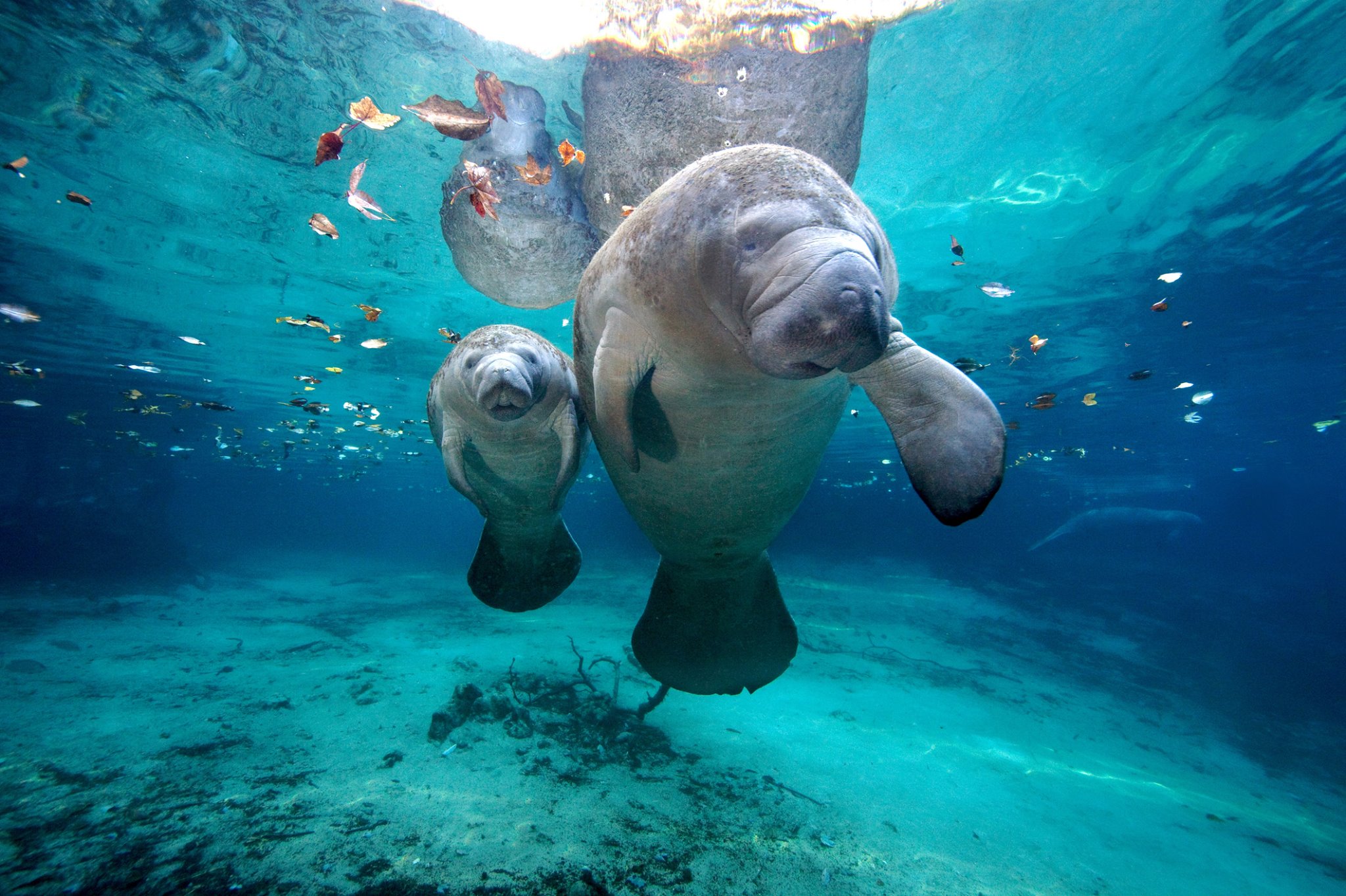
APOLLO BEACH, Fla. – Today, scientists and advocates from Ocean Conservancy shared new analysis finding that ingesting just a baseball’s worth of soft plastics like plastic bags has a 50% chance of killing an adult manatee, Florida’s most endangered gentle giant. Moreover, the data showed that this iconic species ingests plastics at startling rates. Nearly 1 in 6 Florida manatees (16%) had plastics in their digestive systems when they died; for 1 in 25, that plastic killed them.
“These are preventable deaths,” said Jon Paul “J.P.” Brooker, Ocean Conservancy’s director of Florida conservation. “When plastic trash gets caught in seagrass meadows, manatees aren’t able to pluck it out while grazing. They swallow it and suffer the consequences. That should never happen in Florida waters.”
The analysis is based on Ocean Conservancy’s recently published peer-reviewed study in the journal Proceedings of the National Academy of Science, in which authors examined data from more than 10,000 necropsies, or animal autopsies, across the globe, to determine the lethal dose of plastics for sea birds, sea turtles and marine mammals.
“We’ve long known that ocean creatures of all shapes and sizes are eating plastics; what we set out to understand was how much is too much,” said lead author of the study Dr. Erin Murphy, Ocean Conservancy’s manager of ocean plastics research. “The lethal dose varies based on the species, the animal’s size, the type of plastic it’s consuming, and other factors, but overall it’s much smaller than you might think.”
Other Florida Species Also at Risk
Manatees were not the only Florida species to ingest deadly doses of plastic pollution. All five species of sea turtles that nest on Florida beaches – green, loggerhead, hawksbill, leatherbacks and Kemp’s ridley – had at least several individuals with plastics in their guts in the dataset. Loggerheads were most frequently impacted, with nearly 70% of loggerheads having ingested plastics; while nearly 60% of leatherbacks and 45% of green turtles had plastics in their guts.
One in 20 of all sea turtles in the dataset were killed by eating plastics, highlighting that turtles are particularly vulnerable to plastic pollution:
- Two golf balls’ worth of plastic bags (about 5.6 inches³) leads to a 50 percent chance of death for an adult sea turtle measuring about 39 inches
- Less than half a baseball’s worth of plastics will kill one in two loggerhead turtles, which weigh hundreds of pounds
- Just over a softball’s worth (36 inches³) of plastic can kill nine out of 10 sea turtles
- Just one teaspoon of plastics can kill a newly hatched green sea turtle
“These animals have survived since the age of dinosaurs,” said Brooker. “It would be a tragedy for ocean plastics to be the reason they disappear.”
Several dolphin and whale species that inhabit Florida’s waters were also found with plastics in their guts, including 32% of sperm whales, 14% of Risso’s dolphins as well as rough-toothed dolphins, 11% of common dolphins and 8% of bottlenose dolphins.
Overall, the study found that seabirds are the most vulnerable animal group: just three sugarcubes’ worth of plastics can kill a least tern – a seabird that nests on Florida’s sandy beaches. Rubber – such as balloon pieces – are especially lethal: just three pea-sized pieces each the size of a pea can kill a seabird.
A Crisis Florida Can Stop
Scientists estimate that more than a garbage truck’s worth of plastics enters the ocean every minute, and Florida’s ocean wildlife are suffering as a result. In 2024 alone, volunteers with Ocean Conservancy’s International Coastal Cleanup (ICC) removed over 250,000 pounds of trash from Florida beaches and waterways, including 109,628 bottle caps, 99,198 cigarette butts, and 31,455 food wrappers.
Ocean Conservancy has already spearheaded successful campaigns to address balloon as well as cigarette litter (cigarettes are made of plastics); but the organization is urging further state and local action to keep plastic out of Florida’s rivers, springs, and coastal habitats. Science supports that policies can have direct benefits to the habitats that are relied upon by Florida wildlife: A peer-reviewed study released earlier this year and that drew from Ocean Conservancy’s ICC data showed that plastic bag policies lead to a 25% – 47% reduction of plastic bags in the environment where they are implemented.
Additional solutions include:
- Reducing other forms of single-use plastics throughout the state
- Expanding fishing gear disposal stations and retrieval programs
- Strengthening stormwater capture and filtration systems for microplastics and other contaminants
- Ensuring plastic producers share responsibility for material recovery and cleanups
“Every piece of plastic kept out of the water is one more manatee or turtle safe to feed another day,” added Brooker. “We have the solutions, and in fact this study makes it clear that targeting specific items like balloons is a smart approach. Now we need the will to act.”
###
CLICK HERE TO DOWNLOAD BROADCAST-QUALITY SOUND FROM J.P. BROOKER. Courtesy: Ocean Conservancy
Photos and b-roll of marine animals, ocean plastic pollution, and other related subjects, as well as FAQ about the study, are available here.
ABOUT OCEAN CONSERVANCY
For more than 50 years, Ocean Conservancy has delivered effective, evidence-based solutions for the ocean and all who depend on it. Today, we continue to unite science, people and policy to protect our ocean from the greatest challenges it faces: climate change, plastic pollution and biodiversity loss. We are a 501(C)3 headquartered in Washington, D.C. that inspires a worldwide network of partners, advocates and supporters through our comprehensive and clear-eyed approach to ocean conservation. Together, we are securing a healthy ocean and a thriving planet, forever and for everyone. For more information, visit oceanconservancy.org, or follow us on LinkedIn, Facebook, X (formerly Twitter), Bluesky or Instagram.
Media Contact
Recommended Reads
