
STATEMENT: Fisheries Council Fails Alaska Salmon
Council Doesn’t Do Enough to Protect Chum Salmon Headed to Struggling Western Alaska Communities
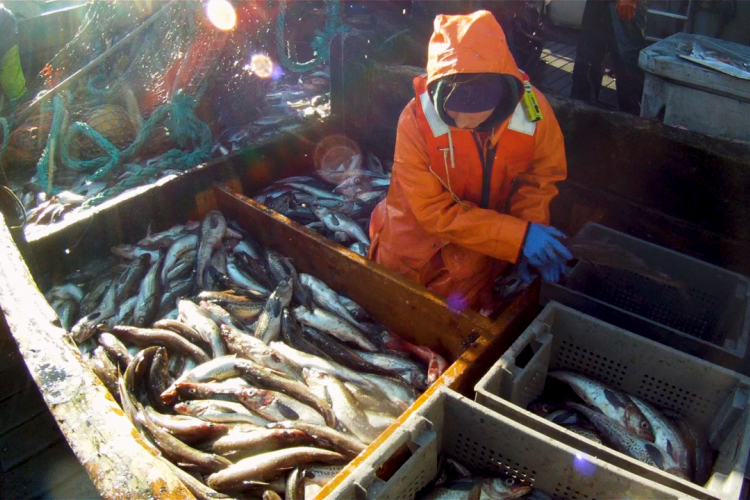
ANCHORAGE, Alaska – This week, the North Pacific Fishery Management Council failed to take meaningful action to reduce chum salmon bycatch by the Bering Sea pollock fleet, despite requests from over 150 Tribes to adopt meaningful bycatch limits. The council adopted a bycatch limit, which is an important step. However, the limit is very high and is limited to a very small area, allowing unlimited bycatch to occur outside this area. Half of the chum salmon caught as bycatch in the Bering Sea pollock fishery are from Alaska and the Pacific Northwest. Becca Robbins Gisclair, Ocean Conservancy’s Senior Director, Arctic & Northern Waters, issued this statement in response:
“The Council’s action today is an important step forward in setting limits on the number of chum salmon that can be caught as bycatch by the multi-billion dollar pollock fleet. But this doesn’t go far enough – the Council stepped an inch forward when a mile was needed. It continues to protect the pollock fleet at the expense of chum salmon and the Alaskan communities who depend on them. In the last 35 years, trawlers have caught more than 6.3 million chum salmon while traditional Tribal harvests have been reduced to zero in some rivers. This action is a business as usual approach that ignores the science and Traditional Knowledge supporting meaningful bycatch reductions.”
Last month, Ocean Conservancy and the Alaska Marine Community Coalition published a study showing that the pollock industry’s recent research failed to account for the fishery’s negative impacts, while overstating the economic benefit of the fishery for everyday Alaskans. Notably, the industry’s own research shows that roughly two-thirds of the profit from pollock trawling leaves Alaska.
###
ABOUT OCEAN CONSERVANCY
For more than 50 years, Ocean Conservancy has delivered effective, evidence-based solutions for the ocean and all who depend on it. Today, we continue to unite science, people and policy to protect our ocean from the greatest challenges it faces: climate change, plastic pollution and biodiversity loss. We are a 501(C)3 headquartered in Washington, D.C. that inspires a worldwide network of partners, advocates and supporters through our comprehensive and clear-eyed approach to ocean conservation. Together, we are securing a healthy ocean and a thriving planet, forever and for everyone. For more information, visit oceanconservancy.org, or follow us on LinkedIn, Facebook, X (formerly Twitter), Bluesky or Instagram.
Recommended Reads
