
NEWS: “America’s Fishing Future is at Risk”: Report Identifies Key Challenges to U.S. Fisheries Amid Fast-Changing Ocean Conditions
Ocean Conservancy Report Coincides with 50th Anniversary of America’s Fisheries Law as Presidential Budget Proposes Draconian Cuts to NOAA
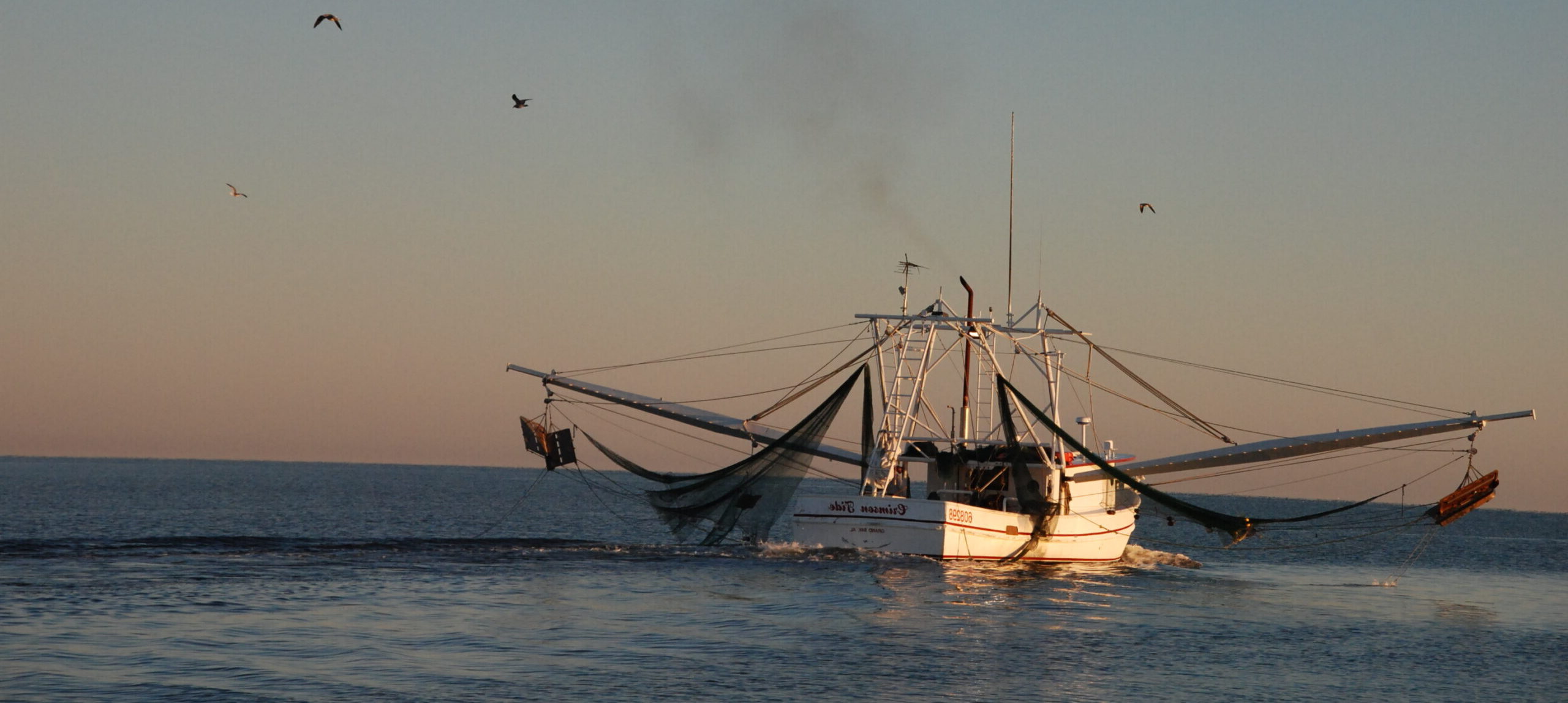
WASHINGTON – Today, Ocean Conservancy released a new report, “Drifting Off Course: Challenges in U.S. Fisheries Management and Charting the Path Forward,” outlining key threats to America’s federally managed fisheries, including species like flounder, salmon and shrimp that are seafood staples and critical links in the ocean ecosystem. The report coincides with the 50th anniversary this month of the Magnuson-Stevens Fishery Conservation and Management Act, America’s premier fisheries law, and comes in the wake of the White House proposing $1.6 billion in cuts to the National Oceanic and Atmospheric Administration (NOAA) – the agency tasked with implementing the law.
The report found that while the Magnuson-Stevens Act has helped rebuild 52 of the more than 500 federal fisheries currently managed under the law, 42 stocks remain overfished, and 65% of stocks currently in designated rebuilding plans had flat or decreasing population estimates. Meanwhile, fisheries disasters – unpredictable shocks to ecosystems such as hurricanes, marine heat waves or harmful algal blooms that result in mass die-offs of fish and other ocean wildlife – are increasing in frequency and severity. A 2021 peer-reviewed study found that extreme environmental events accounted for 95.3% of revenue loss from fishery disasters between 2014 and 2019, up from 38.5% from 1994 to 1998.
“For decades, America’s fisheries were on the upswing thanks to our science-based approach to managing these resources,” said Ocean Conservancy’s Senior Director of Fish Conservation Meredith Moore and co-author of the report. “But between climate change, habitat destruction and pollution, growing recreational fishing demand and a troubling race to remove protections and sideline science, we’re really seeing a perfect storm come together. If we don’t address these new realities, America’s fishing future is at risk.”
Climate Change and Habitat Degradation are Changing Fish Stocks as We Know Them
The report details how changing ocean conditions like deoxygenation, acidification and warmer temperatures – attributable to greenhouse gas emissions, pollutant run-off and other factors – mean that many fish stocks are moving to new areas or experiencing population declines. A study published earlier this year estimates that climate change is reducing the amount of fish by up to 20% annually. Meanwhile, fisheries managers are not adapting and innovating accordingly. A Government Accountability Office report found that just 12 of 46 fishery management plans included any information related to climate at all.
“To survive and thrive, fish need specific ocean conditions,” said Dr. Elizabeth Cerny-Chipman, an ecologist and Ocean Conservancy’s U.S. fisheries policy manager, who co-authored the report. “And when those conditions change, it creates a domino effect. Fish might move to a different area, with different predators, less food to eat, and so forth. Fishery managers need to act with precaution and make sure they are ahead of the game.”
Bycatch and Other Fishing Pressures are Growing
Just as fish are experiencing unprecedented habitat changes and losses, bycatch (the unintended catch of non-target fish and other wildlife, such as turtles or marine mammals) remains a challenge both nationally and regionally. For example, salmon bycatch in Alaska is contributing to the collapse of traditional Indigenous salmon fisheries, localized commercial salmon fisheries, and recreational fishing with consequences for both sustainability and food security.
At the same time, coastal populations have increased by 40% over the last 50 years, contributing to growing pressure from recreational anglers. In the Southeast, recreational fisheries are allocated more than half of the catch for many popular stocks, such as greater amberjack (80%) and gag grouper (65%) in the Gulf as well as red snapper (71.93%), red grouper (56%) and most of the porgy complex in the South Atlantic.
However, recreational fisheries often lag behind other sectors in terms of data collection, monitoring and accountability, and some recreational fisheries routinely exceed their limits. The problem is particularly visible in Florida, from which nearly half of all angling trips in the U.S. originate.
“We are loving Florida’s fisheries to death,” said Ocean Conservancy’s Director of Florida Conservation Jon Paul “J.P.” Brooker, an environmental lawyer, sixth-generation Floridian and avid surfer, diver and fisherman. “Over the past five years, nearly a thousand people have moved to Florida every single day, and that means more people out on the water fishing. The Magnuson-Stevens Act is designed to keep all of us on the water as much as possible, but that means sticking to the best available science, which right now we’re not doing with recreational fisheries.”
A System Needing Investment, Not Abandonment
Among other solutions, the report emphasizes that monitoring can be improved to address all of these issues – from better understanding and predicting the impacts of climate change on fish to more accurately accounting for bycatch. NOAA, which is tasked with collecting and analyzing much of the scientific data, produced 183 stock assessments in 2025, meaning more than 300 fisheries are making decisions without the latest information. In addition, outdated fishery data systems fail to meet modern needs; for example, many fisheries do not submit their catch data electronically. And substantial opportunity exists to better utilize Indigenous and Traditional Knowledge to inform shared management.
Unfortunately, NOAA experienced a 20% staff reduction in 2025, with many positions still vacant. Earlier this month, the White House released its proposed budget calling for even more draconian cuts to the agency.
“Funding cuts for NOAA could not come at a worse time when you consider just how vulnerable American fisheries and fishermen are right now,” said Jeff Watters, Ocean Conservancy’s vice president of external affairs. “We are essentially putting blindfolds on and hoping for the best.”
Ocean Conservancy has been advocating to preserve funding for NOAA, and works with fisheries managers, scientists and others to strengthen management best practices. Last year, the organization published a paper in the peer-reviewed journal Frontiers in Marine Science outlining 27 actions fishery managers can take immediately to help address changing ocean conditions in U.S. fisheries.
“The way we manage fisheries really matters,” said Moore. “For so many, fishing is at the heart of identity, of cultural heritage. Hundreds of thousands of Americans rely on fish to make a living. Millions of people rely on fish as a food source. And the ocean needs fish – dolphins, whales, and seabirds need fish. We need to get this right.”
###
ABOUT OCEAN CONSERVANCY
For more than 50 years, Ocean Conservancy has delivered effective, evidence-based solutions for the ocean and all who depend on it. Today, we continue to unite science, people and policy to protect our ocean from the greatest challenges it faces: climate change, plastic pollution and biodiversity loss. We are a 501(C)3 headquartered in Washington, D.C. that inspires a worldwide network of partners, advocates and supporters through our comprehensive and clear-eyed approach to ocean conservation. Together, we are securing a healthy ocean and a thriving planet, forever and for everyone. For more information, visit oceanconservancy.org, or follow us on LinkedIn,Facebook, X (formerly Twitter), Bluesky or Instagram.
Media Contact
Recommended Reads
