
NEWS: Ocean Conservancy-Led Research Wins Highly Selective Cozzarelli Prize for Scientific Excellence
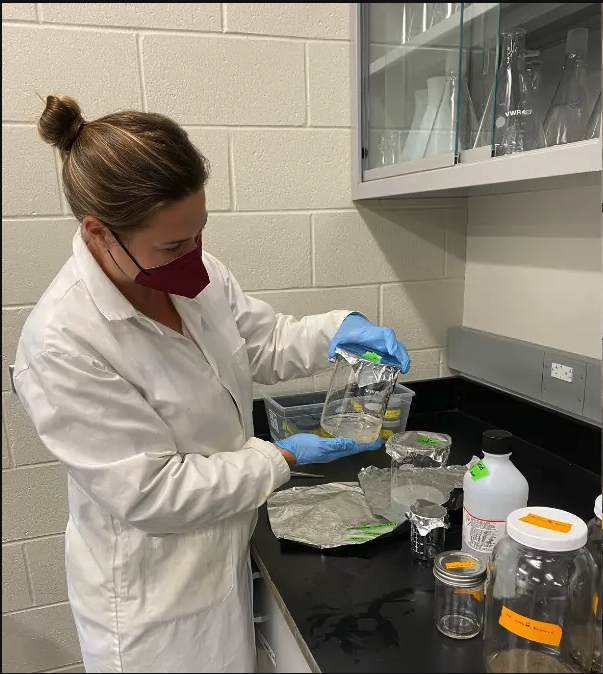
WASHINGTON – Research led by Ocean Conservancy scientists was one of six papers selected by the Editorial Board of the Proceedings of the National Academy of Sciences (PNAS) from more than 3,600 research articles that appeared in the journal in 2025 to receive the Cozzarelli Prize. The journal is among the most prestigious, highly selective peer-reviewed scientific journals in the world, and its Cozzarelli Prize recognizes scientific excellence and originality in six categories. The paper, “A quantitative risk assessment framework for mortality due to macroplastic ingestion in seabirds, marine mammals, and sea turtles,” won in the category of Applied Biological, Agricultural, and Environmental Sciences.
The research is the most comprehensive study yet to quantify the extent to which a range of plastic types — from soft, flexible plastics like bags and food wrappers; to balloon pieces; to hard plastics ranging from fragments to whole items like beverage bottles — result in the death of seabirds, sea turtles, and marine mammals that consume them. The study found that lethal thresholds of plastics ingestion can be quite low: for example, consuming less than three sugar cubes’ worth of plastics has a 90% likelihood of killing a seabird like an Atlantic puffin.
The awardees will be recognized on Sunday at the National Academy of Sciences’ Annual Meeting Award Ceremony in Washington, D.C. The three Ocean Conservancy scientists who co-authored the paper include Manager of Ocean Plastics Research, Dr. Erin Murphy; Director of Plastics Research, Dr. Britta Baechler; and Vice President of Conservation, Ending Ocean Plastics, Nicholas Mallos. Dr. Murphy was interviewed for a video celebrating the award.
Ocean Conservancy’s research team recently used this award-winning plastic ingestion study to create a free, publicly available website, WildlifeImpactCalculator.org, to enable people who clean up beaches and waterways worldwide to determine how many marine animals they are helping protect with their efforts.
Ocean Conservancy’s science team has led a number of influential peer-reviewed papers on plastics, including on microplastics in edible proteins – which is in the top 5% of all research papers and ranked third out of over 15,000 publications at the Journal Environmental Pollution for its impact according to Almetric – and a ranking of marine mammals based on their vulnerability to plastic pollution. Several more research papers are currently in the works and expected to be published later in 2026 and 2027.
An estimated 11 million metric tons of plastics enter the ocean each year, the equivalent of one garbage truck’s worth every minute. In addition to conducting original plastics research, Ocean Conservancy works on solutions to plastic pollution that prevent it from reaching beaches and waterways in the first place. Ocean Conservancy has advocated for policies at the local, state, federal and international levels such as California’s SB54, Florida’s balloon release ban, the Farewell to Foam Act, the UN Plastics Treaty and more. Ocean Conservancy is also home to the International Coastal Cleanup® – the largest single day beach and waterway cleanup in the world, which mobilizes hundreds of thousands of volunteers annually to remove millions of pounds of trash – and the Global Ghost Gear Initiative™, the largest international alliance dedicated to solving the issue of lost or abandoned fishing gear, also known as ghost gear, which is pound for pound the deadliest form of plastic pollution to marine life.
The plastic ingestion paper can be found HERE.
The corresponding Wildlife Impact Calculator can be found HERE.
The microplastics in proteins paper can be found HERE.
The marine mammal plastic pollution vulnerability ranking can be found HERE.
###
ABOUT OCEAN CONSERVANCY
For more than 50 years, Ocean Conservancy has delivered effective, evidence-based solutions for the ocean and all who depend on it. Today, we continue to unite science, people and policy to protect our ocean from the greatest challenges it faces: climate change, plastic pollution and biodiversity loss. We are a 501(C)3 headquartered in Washington, D.C. that inspires a worldwide network of partners, advocates and supporters through our comprehensive and clear-eyed approach to ocean conservation. Together, we are securing a healthy ocean and a thriving planet, forever and for everyone. For more information, visit oceanconservancy.org, or follow us on LinkedIn, Facebook, X (formerly Twitter), Bluesky or Instagram.
Media Contact
Recommended Reads
