
Wildlife Fact Sheet
Harbor Seal
Phoca vitulina
About
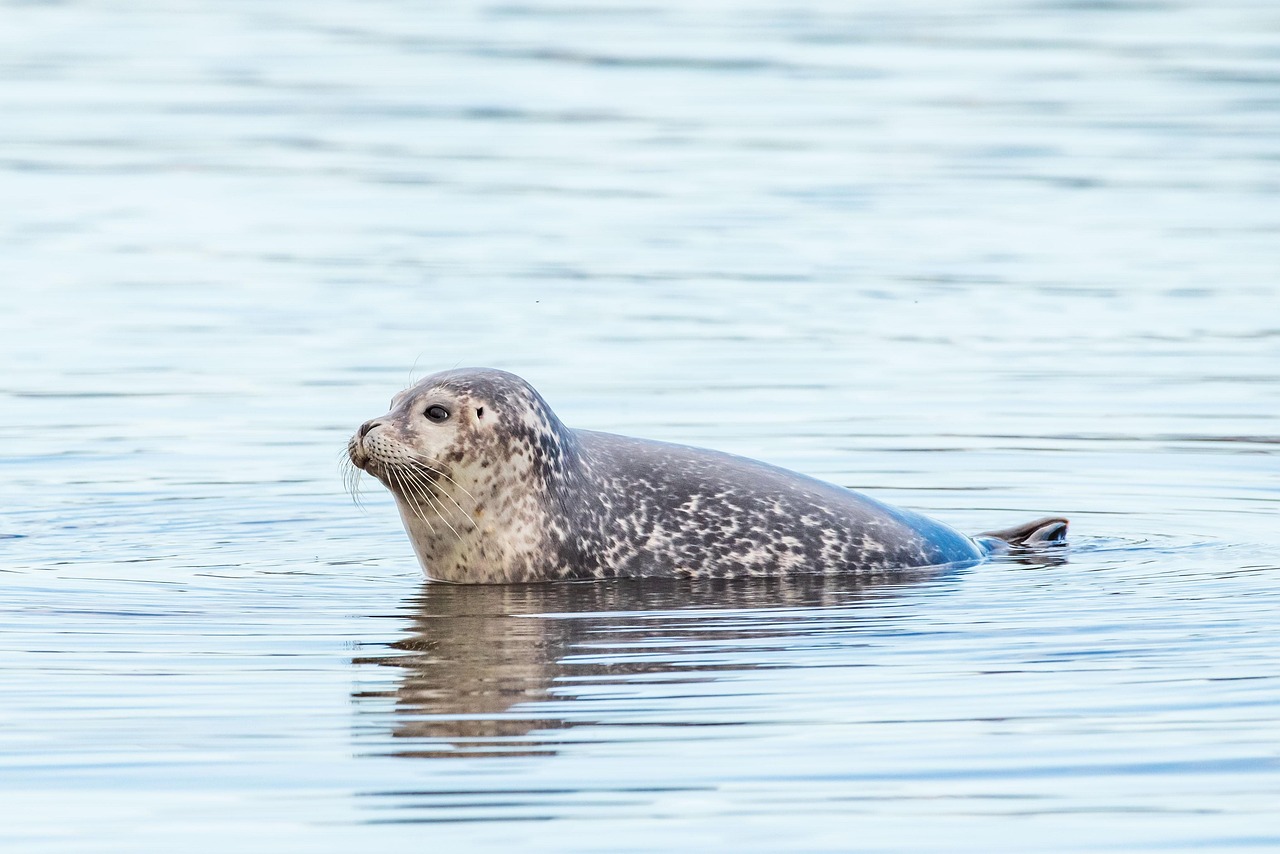
Harbor seals are known for both anchoring in place and traveling long distances. Born and swimming in minutes, harbor seals will spend most of their lives at sea in the same area where they took their first breaths. Harbor seal pups are a whopping 24 pounds when born and may not reach maturity until seven years of age. Harbor seals can swim thousands of miles during their lifetime.
While considered nonmigratory, these adventurous ocean dwellers are still known to travel long distances seasonally to find the best seafood. Harbor seals often raise their young in groups for safety from sharks and other big predators, yet they do not necessarily form close bonds within these large groups. Because they are less graceful and far slower on land, they stick together, but this close proximity often causes fights among beachmates. Male harbor seals assert their dominance through aggression and size—reaching up to 300 pounds and six feet long. Females are just as striking at around 190 pounds and five feet long.
Did You Know?
Harbor seals are natural deep-sea divers. They are known to go to depths as far as 1500 feet below the surface searching for food.
Get Ocean Updates in Your Inbox
Sign up with your email and never miss an update.
Status and Conservation
Although harbor seals are not considered endangered, they are protected under the U.S. Marine Mammal Protection Act. There are several ocean threats that pose an immediate danger to the species—one of those being plastic pollution.
Because they dive for fish and shellfish, harbor seals are vulnerable to being trapped in old, discarded fishing equipment also called ghost gear. Harbor seals have also been found to ingest rubber bait, fishing line, plastic sheeting and food wrappers. When swallowed, these types of plastics have been found to lead to death in other marine animals, including whales.
Recommended Reads
