
All About Gobies
The goby is a small but mighty fish that plays a big role in our ocean
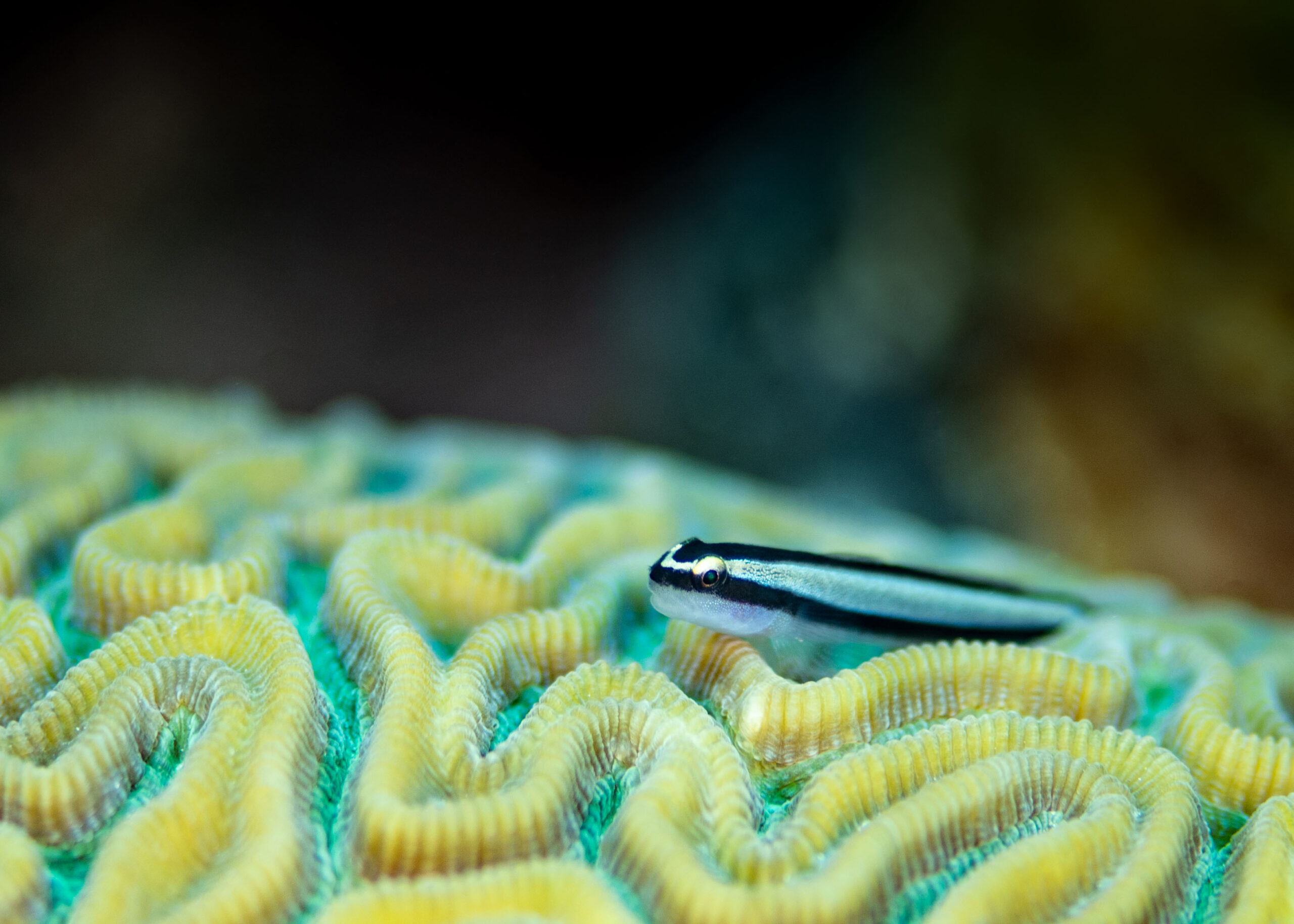
There are more than 2,000 species of gobies (Gobiidae) known to science today, making them the largest family of fish in the ocean. But these small creatures are far more complex and essential to marine ecosystems than first meets the eye. Found all around the world in brackish, fresh and salt water in tropical and subtropical regions, they are an astonishingly diverse group of fish with several curious characteristics that set them apart.
Most gobies are quite small and don’t usually measure more than six inches long. Measuring just about eight millimeters long, the dwarf pygmy goby (Trimmatom nanus) is not only the tiniest goby known to science but also one of the smallest of all fish species in the world.
Primarily bottom-dwellers, gobies are known to be excellent foragers and have evolved expert burrowing behaviors over time. As they sift around looking for food like copepods, seaworms and tiny crustaceans, their movement helps to aerate sediment and keep algae in check. Some are even known to be “cleaner fish,” snacking on parasites they remove off larger creatures. It’s like a spa day for the animal being cleaned and a choose-your-own-adventure buffet for the gobies. Studies also show that cleaner goby activity is largely tied to the microbial health of coral reefs, showcasing that even the tiniest of species are essential to functioning marine ecosystems.
Gobies have some unique aspects to their anatomy, too. First, their fused pelvic fins are designed to help them form a strong suction cup to perch on coral reefs, rocks and other ocean terrain amidst turbulent currents. Some freshwater species are even known to use this suction to climb waterfalls. It may come as no surprise then that gobies are cousins to mudskippers, animals known to “walk” through mud. There are more species-specific features that set certain gobies apart. From the use of bioluminescence to symbiotic relationships with shrimp, the adaptations within the goby family are truly wide-ranging. Some species have even been found to use marine terrain memorization to navigate back to the tide pools where they were born. Isn’t nature mind-blowing sometimes?
Get Ocean Updates in Your Inbox
Sign up with your email and never miss an update.
Gobies have equally complex and varied behaviors. Male gobies are infamous for being territorial protectors of their nests. Many larger males are known as “guarders;” these hopeful fish make careful nests to attract a mate, and once fertilization occurs, guarders will remain diligently near the nests to keep eggs safe. However, there’s another type of male goby that complicates this dynamic. These other males are known as “sneaker gobies” and are called that for one reason: They’re sneaky! If guarder gobies aren’t careful, sneakers can creep into the nest, fertilize some of the eggs and quickly escape. As if on an underwater episode of Maury, guarder males who aren’t careful could end up unknowingly babysitting little gobies that aren’t their actual offspring.
Gobies serve as indicators of ecological health and are essential to keeping delicate food webs in check. Unfortunately, many changes in our ocean threaten their ability to survive and thrive today. Coral bleaching and degradation endanger the health of one of their key habitats, and a combination of warming waters and coastal development can make it difficult for both juvenile and adult gobies to survive and thrive.
Healthy gobies mean a healthy ocean. Their essential role in marine ecosystems demonstrates that even the tiniest creatures play a major role in helping hold together the beautiful yet fragile habitats that make up our beloved ocean. Visit Ocean Conservancy’s Action Center and join the movement to protect our blue planet today and for years to come—from the tiniest goby to the largest whales, our ocean is counting on us.
Recommended Reads
