
NEWS: Ocean Conservancy Opposes Shortsighted Red Snapper Exemptions
Exemptions Are “An End Run Around Sustainable Management”
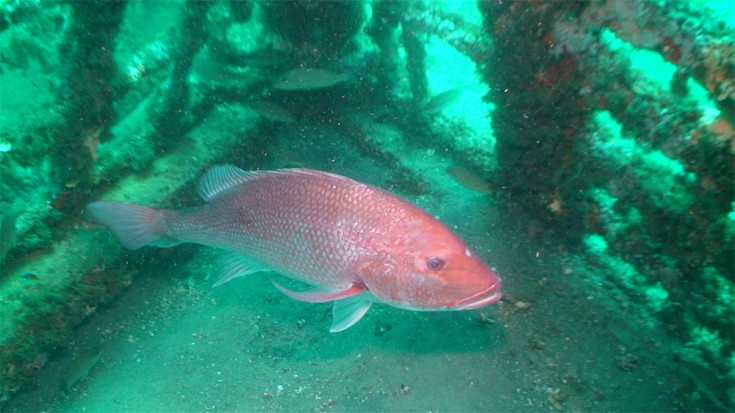
WASHINGTON – Today, President Trump announced on Truth Social the approval of Exempted Fishing Permits (EFPs) for Florida, Georgia, North Carolina and South Carolina. These exemptions dramatically extend recreational fishing seasons for red snapper in the South Atlantic. Overfishing drove the red snapper spawning population to just 11% of its historical levels in the 90s and early 2000s. In response, seasons were reduced as part of a rebuilding plan set to last through 2044. These new exemptions risk undermining the progress made to restore this stock to healthy levels that can support fishing for decades to come.
“These exempted fishing permits are an end run around sustainable management,” said Ocean Conservancy’s Senior Director of Fish Conservation Meredith Moore. “Just last year, NOAA’s own analysis showed that a two-day recreational fishing season was needed to prevent overfishing. There is no doubt that these exemptions to allow months-long fishing seasons will lead to overfishing, while new, unproven data collection measures mean we likely won’t even realize the fish are declining until the damage is done.”
The Magnuson-Stevens Fishery Conservation and Management Act — the U.S.’s primary law governing fishing in federal waters — requires that NOAA Fisheries set annual catch limits to prevent overfishing. While the final text of the exemptions has not yet been released, the draft proposals submitted by states failed to meet this basic requirement. The proposed exemptions also implement changes in recreational data collection that circumvent existing processes and may result in data that does not meet necessary standards for management.
The recreational fishery (both for-hire and private anglers) remains open-access, and regional population growth combined with increases in available technologies has led to a steady increase in fishing pressure, especially off the east coast of Florida, where over 90% of red snapper catch is reported.
“Overfishing means sacrificing chances to teach the next generation to fish in order to fill coolers this season,” said Ocean Conservancy’s Director of Florida Conservation J.P. Brooker, an environmental lawyer, avid fisherman and seventh-generation Floridian. “Red snapper is a favorite of Floridians and out of state anglers. No one likes short fishing seasons, but if we don’t follow the science and let these fish recover, we could soon lose this cherished fishing season for good.”
Ocean Conservancy has used available data to estimate the amount of fish that could be caught with exempted permits. The annual catch limit for the recreational sector is 22,797 fish. A recent two- day red snapper fishing season in Florida alone resulted in 24,885 landed fish, which exceeds that limit. A simple expansion using this Florida landings rate, and ignoring the contribution from other states which will have even longer fishing seasons, suggests that as many as 485,000 fish could be landed in a 39-day season. This is over 20 times the annual catch limit — a clear violation of the Magnuson-Stevens Act.
Frequently asked questions about red snapper exempted fishing permits can be found here. Background information on red snapper, exempted fishing permits and the Magnuson-Stevens Act can be found here.
###
ABOUT OCEAN CONSERVANCY
For more than 50 years, Ocean Conservancy has delivered effective, evidence-based solutions for the ocean and all who depend on it. Today, we continue to unite science, people and policy to protect our ocean from the greatest challenges it faces: climate change, plastic pollution and biodiversity loss. We are a 501(C)3 headquartered in Washington, D.C. that inspires a worldwide network of partners, advocates and supporters through our comprehensive and clear-eyed approach to ocean conservation. Together, we are securing a healthy ocean and a thriving planet, forever and for everyone. For more information, visit oceanconservancy.org, or follow us on LinkedIn, Facebook, X (formerly Twitter), Bluesky or Instagram.
Recommended Reads
