
MEDIA BRIEFING: It’s Time to Close the Loophole That Allows Bottom Trawling in Protected Alaskan Waters
Thursday, May 28 Briefing to Feature Commercial Fishermen, Alaska Native Leader, Scientist and Policy Expert Ahead of June Fishery Council Meeting
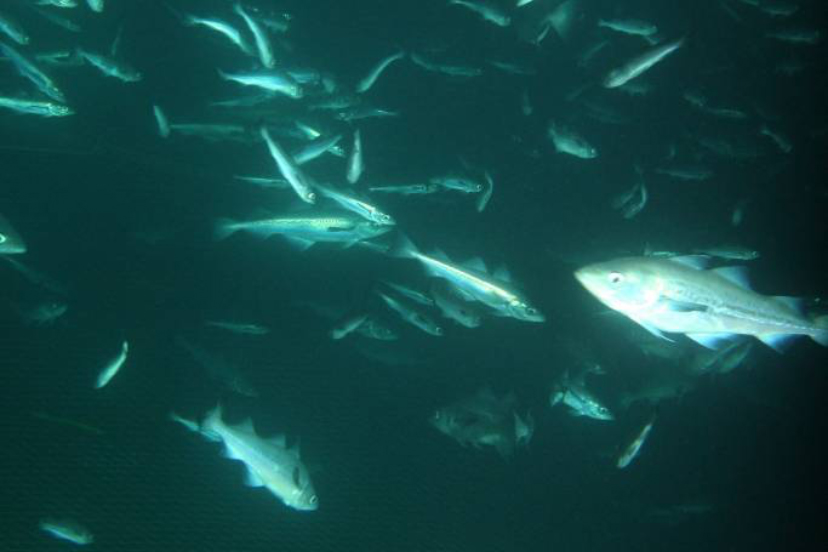
Vancouver, Wash. – At the June North Pacific Fishery Management Council (NPFMC) meeting in Vancouver, Washington, council members have an opportunity to close a long-abused loophole that allows so called “pelagic” or “midwater” trawlers to drag gigantic nets across Alaska’s seafloor in protected areas already closed to bottom trawling. Bottom trawling is one of the most damaging types of fishing in the world. Without any rules requiring them to stay off the bottom, midwater trawlers inflict similar damage in critical habitats.
Representatives from the Alaska Longline Fishermen’s Association, Kuskokwim River Inter-Tribal Fish Commission, Ocean Conservancy and SalmonState will give a brief presentation on Thursday, May 28 at 10 a.m. AKST/11 a.m. PST about what’s at stake during this June NPFMC meeting and will be available to answer questions from reporters afterward. Interested reporters should register here to attend.
The midwater trawl fleets operate in the Bering Sea and Gulf of Alaska and caught over 1.3 million metric tons of Alaska pollock last year. Pollock is used in foods like fish sticks, imitation crab and McDonald’s Filet-O-Fish sandwiches.
In 2025, these fleets also caught nearly 33,000 Chinook salmon in the Bering Sea and Gulf of Alaska and more than 151,000 chum salmon in the Bering Sea as bycatch. The cumulative impacts are even greater: Since 2011, in the Bering Sea alone, midwater pollock trawl fisheries have wasted over 246,000 Chinook salmon and 3.5 million chum salmon as bycatch. This occurs at a time when Alaska Native subsistence fishermen on the Kuskokwim River and other rivers in Western Alaska have seen catastrophic, multi-species salmon declines in the past decade.
Research shows that despite being called “midwater,” the pollock trawl fleet accounts for roughly 40% of all seafloor contact in the Bering Sea alone. These nets can be wider than a football field, catch more than 250,000 pounds of fish in one haul and drag a weighted chain up to a quarter mile long across the bottom. Bottom contact kills seafloor animals like crabs, whose populations have cratered recently; halibut; and deep sea corals, which can take hundreds of years to regrow.
| WHO | Jamie O’Connor, a salmon harvester and fisheries expert. Kevin Whitworth, Kuskokwim River Inter-Tribal Fish Commission executive director and a hunter and fisherman from McGrath, Alaska. Emily Scott, Alaska Longline Fishermen’s Association program and outreach coordinator, commercial fisherman in Sitka, Alaska. Loretta Brown, SalmonState expert in fisheries law and policy with a JD and master’s degree in environmental law and policy. Dr. Megan Williams, Ocean Conservancy expert who holds a doctorate in fisheries management from the University of Alaska Fairbanks. |
| WHAT | Briefing and live questions about the June NPFMC meeting and the consequences of “pelagic” or “midwater” trawlers being allowed to drag the seafloor. |
| WHEN | Thursday, May 28 at 10 a.m. AKST/11 a.m. PST |
| TO REGISTER | REGISTRATION REQUIRED – CLICK HERE TO REGISTER |
###
ABOUT OCEAN CONSERVANCY
For more than 50 years, Ocean Conservancy has delivered effective, evidence-based solutions for the ocean and all who depend on it. Today, we continue to unite science, people and policy to protect our ocean from the greatest challenges it faces: climate change, plastic pollution and biodiversity loss. We are a 501(C)3 headquartered in Washington, D.C. that inspires a worldwide network of partners, advocates and supporters through our comprehensive and clear-eyed approach to ocean conservation. Together, we are securing a healthy ocean and a thriving planet, forever and for everyone. For more information, visit oceanconservancy.org, or follow us on LinkedIn,Facebook, X (formerly Twitter), Bluesky or Instagram.
Media Contact
Kevin Whitworth
kevinwhitworth@kritfc.orgRecommended Reads
