
STATEMENT: Fishery Council Maintains Loophole That Damages Protected Seafloor
So-Called ‘Midwater’ Trawlers are Allowed to Fish on the Bottom in Areas Closed to Bottom Trawling
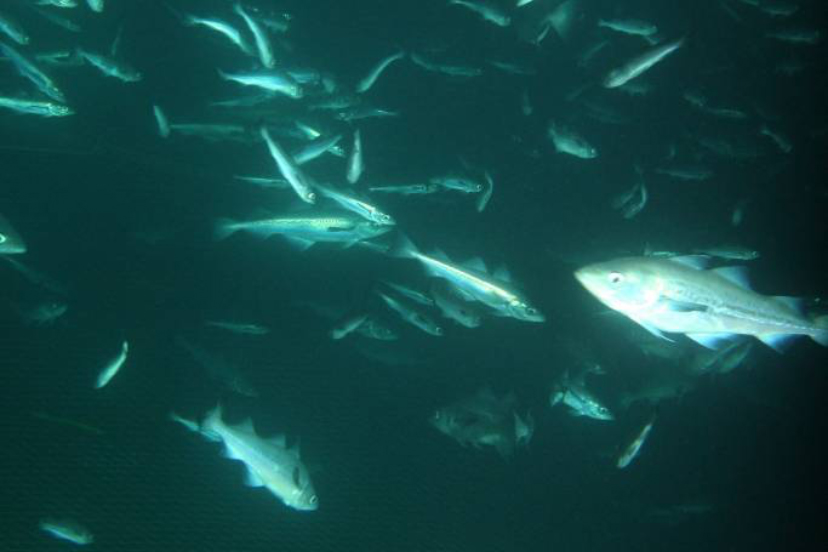
VANCOUVER, Wash. – The North Pacific Fishery Management Council (NPFMC) failed to adopt a clear standard for ‘pelagic’ or ‘midwater’ trawl gear at its June meeting. This means that so-called ‘midwater’ trawl vessels can continue to exploit a loophole that allows them to fish on the seafloor in protected areas closed to bottom trawling. The motion passed by the NPFMC includes no enforceable standard, only asking for a discussion paper. What’s more, it relies on highly uncertain output from a single model to claim that habitat is not meaningfully damaged by trawl nets. ‘Midwater’ trawl nets can be wider than a football field and are anchored by a weighted chain up to a quarter mile long. Ocean Conservancy’s Dr. Megan Williams, a fisheries scientist with a doctorate in fisheries management from the University of Alaska Fairbanks, issued the following statement:
“There are a lot of complicated issues before the council, but this is not one of them. Huge nets and heavy chains should not be allowed on the seafloor in protected areas where bottom trawling is prohibited. It’s that simple.
“Bottom trawling has long been recognized as one the most harmful forms of fishing and these areas were protected from that for important reasons. The idea that trawling on sensitive corals and sea whips with a heavy chain won’t damage them goes against both common sense and global science.
“This council decision leaves the so-called ‘midwater’ trawl loophole open and habitat unprotected. This is deeply harmful to the ocean and all who rely on it. We will continue to advocate for fair and sustainable fisheries.”
###
ABOUT OCEAN CONSERVANCY
For more than 50 years, Ocean Conservancy has delivered effective, evidence-based solutions for the ocean and all who depend on it. Today, we continue to unite science, people and policy to protect our ocean from the greatest challenges it faces: climate change, plastic pollution and biodiversity loss. We are a 501(C)3 headquartered in Washington, D.C. that inspires a worldwide network of partners, advocates and supporters through our comprehensive and clear-eyed approach to ocean conservation. Together, we are securing a healthy ocean and a thriving planet, forever and for everyone. For more information, visit oceanconservancy.org, or follow us on LinkedIn, Facebook, X (formerly Twitter), Bluesky or Instagram.
Media Contact
Recommended Reads
