
NEWS: New Report Shows More Than 1.5 Million Pounds of Trash Cleaned Up From Alaskan Coastlines in 2025
1,659 People Participated in Cleanups From Southeast Alaska to the Bering Strait region in 2025
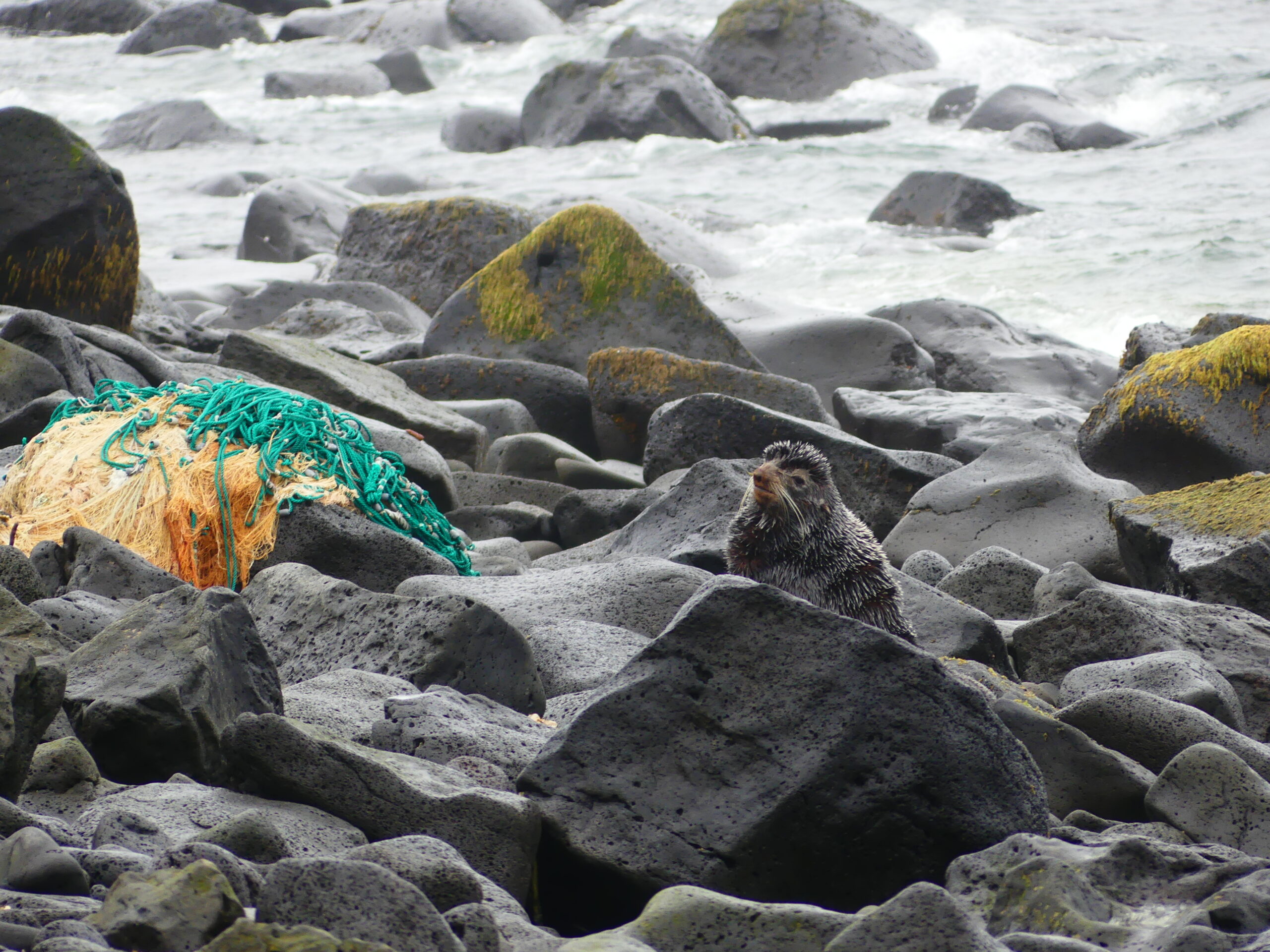
Juneau, Alaska – 1.5 million pounds of marine debris were removed last year in documented beach cleanups in Alaska. That’s the takeaway from a statewide report on marine debris cleanups released by Ocean Conservancy, Alaska Sea Grant and the Sitka Sound Science Center today. The report documents cleanup efforts in 2025, which involved 1,659 people, 25 lead entities and numerous local partners throughout the state.
“This report gives us an opportunity to better understand the scale of the marine debris problem in Alaska and highlight the incredible efforts happening in communities across the state,” said Ocean Conservancy’s Arctic Marine Debris Manager Kristina Tirman. “Ocean Conservancy is pleased to support and amplify the work of the organizations and Tribes who have been leading this work to protect Alaska’s coastlines and communities.”
Cleanup efforts ranged from one-day community-wide events to multi-month operations in remote locations that required field camps, helicopters and vessels. The scope of cleanups included in the report underscores the need for adequate resources and long-term support to maintain cleanup efforts at this scale. Last month, the Alaska Legislature supported increased federal resources to sustain these efforts by unanimously passing Senate Joint Resolution 20. The resolution is awaiting signature by Governor Dunleavy.
Alaska’s U.S. Senate delegation has provided critical support for this marine debris cleanup work.
“Alaska has more coastline than the entirety of the Lower 48 states, which is why I’ve made it a priority to direct investments to make sure our shores are clean. But we can’t do it alone—I thank Ocean Conservancy for highlighting the important work Alaskans are doing to tackle these cleanup efforts. In 2025, more than 1,600 people worked to remove 1.5 million pounds of marine debris in Alaska. I applaud their hard work and will continue pushing for additional resources,” said Alaska Senator Lisa Murkowski. “It is going to take every one of us to pulling up our Xtratufs to meaningfully address marine debris.”
“The number and the variety of marine-debris cleanups throughout our state is truly impressive,” said Alaska Senator Dan Sullivan. “I’m proud to have supported all these efforts through a series of legislative initiatives, including my Save our Seas bills, that work to tackle global marine debris. Thanks to all who participated. These cleanups are an example of Alaskans coming together to tackle a big but solvable challenge.”
The debris collected varied widely, from microplastics and plastic bottles to creosote-treated lumber and derelict fishing gear known as “ghost gear.” In many Alaskan communities, ghost gear is the most common type of debris removed during cleanups, and it is the deadliest form of plastic pollution to ocean wildlife.
“Alaska Sea Grant is proud to support many of the community-led marine debris removal efforts highlighted in this report through a competitive regranting process, funded by the NOAA Marine Debris Program,” said Alaska Sea Grant’s Director, Ginny Eckert. “Across Alaska, communities, fishermen, Tribal entities, and local organizations took the lead in identifying priorities, organizing cleanups, and protecting the places that are important to them. Some of these groups have been conducting cleanups for decades, while others are just getting started– but all demonstrate the deep commitment and local knowledge that make place-based marine debris removal efforts successful.”
“The Sitka Sound Science Center currently houses the statewide marine debris database and is excited to be part of this effort to compile information on removal work that took place across Alaska in 2025,” said Sitka Sound Science Center’s Managing Scientist, Zofia Danielson. “We hope this data summary assists with continuing to update and expand our database to better capture the scale of marine debris removal efforts in Alaska. Having a more complete picture of this work will improve our collective understanding of marine debris accumulation rates, sources, and impacts.”
Collecting debris is only one piece of the puzzle. Transporting waste out of remote communities to proper recycling or disposal facilities is a major challenge and added expense. In many communities, trash must be loaded onto a barge and shipped to the Lower 48 for disposal.
Cleanups mentioned in this report were planned and led by the Aleut Community of St. Paul Island, Center for Alaskan Coastal Studies, Chichagof Conservation Council, City of Chevak, Dive Alaska, Drifters Fish, F/V Axel, Gulf of Alaska Keeper, Island Trails Network, Kawerak, Inc., Native Village of Afognak, Native Village of Goodnews Bay, Native Village of Port Heiden, Norton Sound Economic Development Corporation, Ocean Plastics Recovery Project, Prince William Sound Stewardship Foundation, Qawalangin Tribe of Unalaska, Resurrection Bay Conservation Alliance, Ridgeline Aviation, Sitka Sound Science Center, Takshanuk Watershed Council, Tongass to Tides Science Academy, Yakutat Tern Festival, Yakutat Tlingit Tribe, and Zender Environmental Health and Research Group.
What They’re Saying
Paviilax “Paul” Melovidov, Aleut Community of St. Paul Island: “We see marine debris every day on our beaches. Fishing line, nets, and other gear impact the seals and birds that have been with us for generations. The statewide data summary helps us better understand the scope and sources of marine debris across Alaska and allows our local cleanup efforts to contribute to a larger picture.”
Molly Kemp, Chichagof Conservation Council: “In our isolated island community of Tenakee Springs we are painfully aware of marine debris. Plastic garbage disfigures our beaches, endangers marine mammals, and ends up back in the ocean as microplastics that threaten the entire food chain – including fish-eating humans. Cleaning up marine debris may be our favorite sport, but responsibly disposing of what we collect has been a huge problem until this Ocean Conservancy program.”
Joshua Braun, Dive Alaska: “Since 2023, Dive Alaska has been coordinating an annual harbor cleanup as a way to blend the dive community with the conservation community. With the help of over 450 volunteers, we’ve removed nearly 15,000 pounds of debris while collecting detailed itemized data on what we’re finding. We’re grateful that our cleanup efforts can contribute to a broader statewide understanding of marine debris and its impacts, and we look forward to continuing these annual harbor cleanup events in the years ahead.”
Nelly Hand, Drifters Fish: “As fishermen who build our life out on this wild coast, we’re committed to being good stewards and putting the time in to take care of it. Together, with a great team of local fishermen, this was our first year leading an organized effort to clean up our local beaches. The density of debris was eye opening, and in two days, we hauled out over 5,500 pounds of plastic bottles, derelict gear, and styrofoam.”
Jacquie Foss, F/V Axel: “Marine debris can degrade the environment we rely on to make a living on the water. As commercial fishermen, we rely on healthy fish populations and they rely on healthy habitat. Addressing marine debris through clean up and prevention is critical to our sustainability.”
Chris Pallister, Gulf of Alaska Keeper: “Gulf of Alaska Keeper, a primary leader of Alaska’s marine debris response the past two decades, is gratified to see so many organizations now working on this devastating and far reaching environmental disaster. It will take an all-hands to rectify this problem. We’re better together. With financial support from NOAA and the help of volunteers recruited by the Center for Alaskan Coastal Studies and the Prince William Sound Stewardship Foundation, GoAK collected 880,000 pounds of debris from less than 10 miles of Montague Island shoreline last summer. With our terrific partners, we hope to exceed that production this summer.”
Anahma Shannon, Kawerak, Inc.: “Communities across the Bering Strait region are on the front lines of battling marine debris, and last summer’s cleanups showed the strength and commitment of our local partners and volunteers. We’re grateful to Ocean Conservancy for working alongside us to ensure that debris collected from our beaches can be transported and recycled, as opposed to being left in village landfills. We look forward to continuing this partnership for many years to come as we work together to protect our coastlines and keep Alaska beautiful.”
Native Village of Afognak: “Dig Afognak is a unique camp hosted on the remote Afognak Island, only accessible by boat for up to 65 people for a week-long cultural experience. Every year participants, including youth, do a thorough beach clean-up on Afognak Island. When the children participate in gathering hundreds of pounds of marine debris, they feel a sense of responsibility and ownership of the lands and waters. Last year we removed four super sacks of marine debris from the environment.”
Alice Julius, Native Village of Goodnews Bay: “Living near the ocean, tucked in the inner corner of the bay, we live on the fish returning to the rivers from the ocean waters. Our trash matters, if we don’t do this today, tomorrow, my trash can kill the food that had kept my ancestors nourished. It wasn’t long ago that we had plastic bags, plastic containers, plastic toys, toxic substances that are now entering the waters that fed our ancestors. So today we focus on prevention from a small community in the corner of the bay. Hoping to be a role model for the communities north and south of this beautiful village called Goodnews Bay. We are trying to do prevention because we noticed that we have not picked up a habit of prevention because we haven’t personally seen animals feed on our trash, that feed our people in this new generation and time. This new generation live off of store bought food which has sadly become a trend that isn’t healthy for our bodies, but change comes with change, therefore with this change we need to change our habits, and habits, like any other habit, can take time because it’s like an addiction that needs a counselor, to break from the habit that we unknowingly become accustomed to and I thank our children who are willing to pass the message on to our community members because someday one of them will have made a difference.”
Andy Schroeder, Ocean Plastics Recovery Project: “Marine debris cleanup in Alaska requires the same level of logistical planning and operational capacity as many industrial or disaster-response efforts. For decades in Alaska, we have witnessed a slow-moving, human-caused environmental disaster that threatens marine ecosystems and the people and communities that depend on them. At Ocean Plastics Recovery Project, we believe this crisis is still reversible, but long-term success will require systemic change. Cleanup operations remain essential, but they must be paired with sustained monitoring, improved logistics, stronger accountability, and better systems for measuring and reporting marine plastic impairment over time. And after the seasonal cleanup effort is over, we must work to change the systems that delivered the debris here in the first place.”
Richard Rogers, Kake Shoreline Cleanup : “I have been a commercial fisherman in Southeast Alaska for over 50 years, and I know the importance of helping to keep the ocean environment clean. I have only recently gotten involved with the City of Kake and the Sea Grant program. This program is a great help in funding the removal and/or repurposing of discarded, abandoned marine debris in remote areas.”
Katie Anderson, City of Kake: “I have traveled the waters of Southeast Alaska since the late 1970s, enjoyed picking up those glass balls back then but also saw the increase of plastic waste as the years flew by. I have repurposed some containers over the years as flowerpots, and you can build some great totes with flat bottom buoy bags! However, there are only a few chicken coops you can cover with old seine net, so this program provides the opportunity and the funding to clean up those big nets here in this small village of Kake and also gives me peace of mind knowing that others are striving to keep Alaskan waterways clean and safe for wildlife. Thank you to everyone involved!”
Charla Hughes, Prince William Sound Stewardship Foundation: “As this report demonstrates, marine debris is a persistent global and local issue; acting locally can have a global impact. The Prince William Sound Stewardship Foundation is proud to be one of the organizations working on the community-led collection of marine debris in Alaska. Making this work possible requires partners at all levels—from grassroots efforts to large-scale initiatives—employing diverse approaches, including cleanups, public education, and innovative solutions for collected debris.”
Ridgeline Aviation: “In Cordova, we know the importance of maintaining healthy shorelines for our way of life. Removing old docks and other marine debris from Odiak Slough not only reduces pollution but also helps beautify a central part of town that supports migratory shorebirds and waterfowl. These statewide cleanup efforts matter because they help protect the places we rely on and keep them healthy for future generations.”
Julia Trischman, Tongass to Tides Science Academy: “After moving from a land-locked state to Port Alexander, I was saddened by the amount of plastic and marine debris washing onto our beaches. What began as beach cleanups with my family grew into a passion for stewardship and education. When I became Coordinator of Alaska Tides to Tongass Science and Arts Academy (ATTSAA), I knew I wanted to include marine debris education in our program. Through hands-on experiences in Southeast Alaska’s marine and rainforest ecosystems, we are helping students become future leaders and environmental stewards. Since 2022, we have seen students pursue studies and careers in environmental stewardship, engineering, and environmental law. Marine debris continues to impact our coastlines, wildlife, and communities, especially in remote areas where cleanup is challenging. That is why statewide collaboration and summaries like this are so important. We are grateful for our partnership with Ocean Conservancy and remain committed to protecting our beaches, waters, wildlife, and future generations.”
Troy Kaleak, Yakutat Tlingit Tribe: “Yakutat’s expansive sandy beaches collect substantial amounts of marine debris each year, making ongoing monitoring and removal efforts critical to understanding and addressing this growing challenge. Tracking the debris we remove provides valuable data that informs future management and cleanup strategies. These efforts help protect the fish, wildlife, and coastal habitats that are integral to our subsistence of way of life and cultural traditions. We are honored to participate in this collaborative initiative and remain committed to serving as responsible stewards of Yakutat’s beautiful and productive coastline.”
Zender Environmental Health and Research Group: “Marine debris threatens the food security and economies of the smallest and most remote communities along our State’s coasts and waterways. We are tremendously proud to work with tribal government partners that are taking action to address this scourge in the face of daunting waste management challenges. And we look forward to continuing our work in 2026 alongside this collaborative group of experienced, motivated, and motivating Alaskans.”
###
ABOUT OCEAN CONSERVANCY
For more than 50 years, Ocean Conservancy has delivered effective, evidence-based solutions for the ocean and all who depend on it. Today, we continue to unite science, people and policy to protect our ocean from the greatest challenges it faces: climate change, plastic pollution and biodiversity loss. We are a 501(C)3 headquartered in Washington, D.C. that inspires a worldwide network of partners, advocates and supporters through our comprehensive and clear-eyed approach to ocean conservation. Together, we are securing a healthy ocean and a thriving planet, forever and for everyone. For more information, visit oceanconservancy.org, or follow us on LinkedIn, Facebook, X (formerly Twitter), Bluesky or Instagram.
Media Contact
Recommended Reads
