The Bering Strait region teems with marine mammals, from bowhead and beluga whales to walruses, polar bears and ringed seals.
An Abundance of Marine Mammals
These marine mammals are also important to food security and the culture of Iñupiat, Central Yup’ik, Cup’ik, St. Lawrence Island Yupik, and Chukchi Peoples of this region.
Click image for more information.
Walrus Haulout Areas Map
This map shows walrus haulout areas in this region. Walrus rest out of water between feedings, usually on sea ice. But shrinking ice coverage means they’re increasingly forced to congregate on land in groups known as “haulouts.”
A Hotspot for Seabirds
An estimated 12 million seabirds nest and forage in the Strait, including puffins, murres, black-legged kittiwakes and crested auklets.
During their marathon flights across the globe, Arctic terns stop in these waters to feed and rest.

Click image for more information.
Important Bird Areas Map
These designated sites host important aggregations of birds. They may be sites used for colonies, nesting, feeding, brood rearing, molting, staging migration or wintering.
More Ship Traffic, More Underwater Noise
Until recently, the underwater environment of the Arctic remained relatively free of human-generated noise.
However, underwater noise caused by vessel traffic, military use of sonar, seismic exploration and resource extraction is increasing in the region.
This can interfere with marine mammals’ ability to use sound for communication, echolocation and avoiding predators. It can disturb feeding, resting, mating, and migration practices and mask hearing or cause temporary or permanent hearing loss, as well as physiological stress.
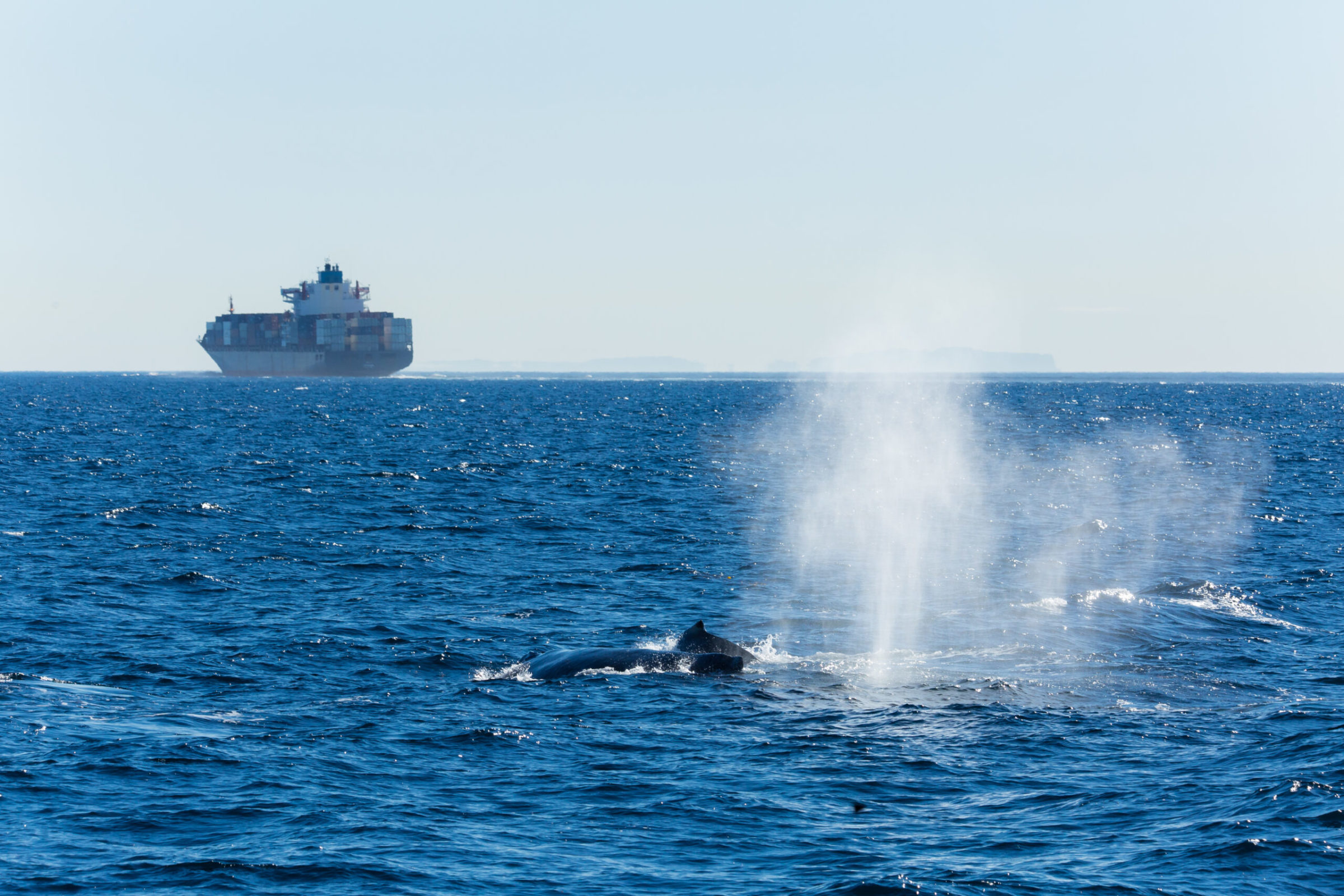
More underwater noise may hinder marine mammals’ ability to detect approaching vessels, possibly increasing the risk of ship strikes.
A Busy Marine Gateway
Increased Risk of Ship Strikes
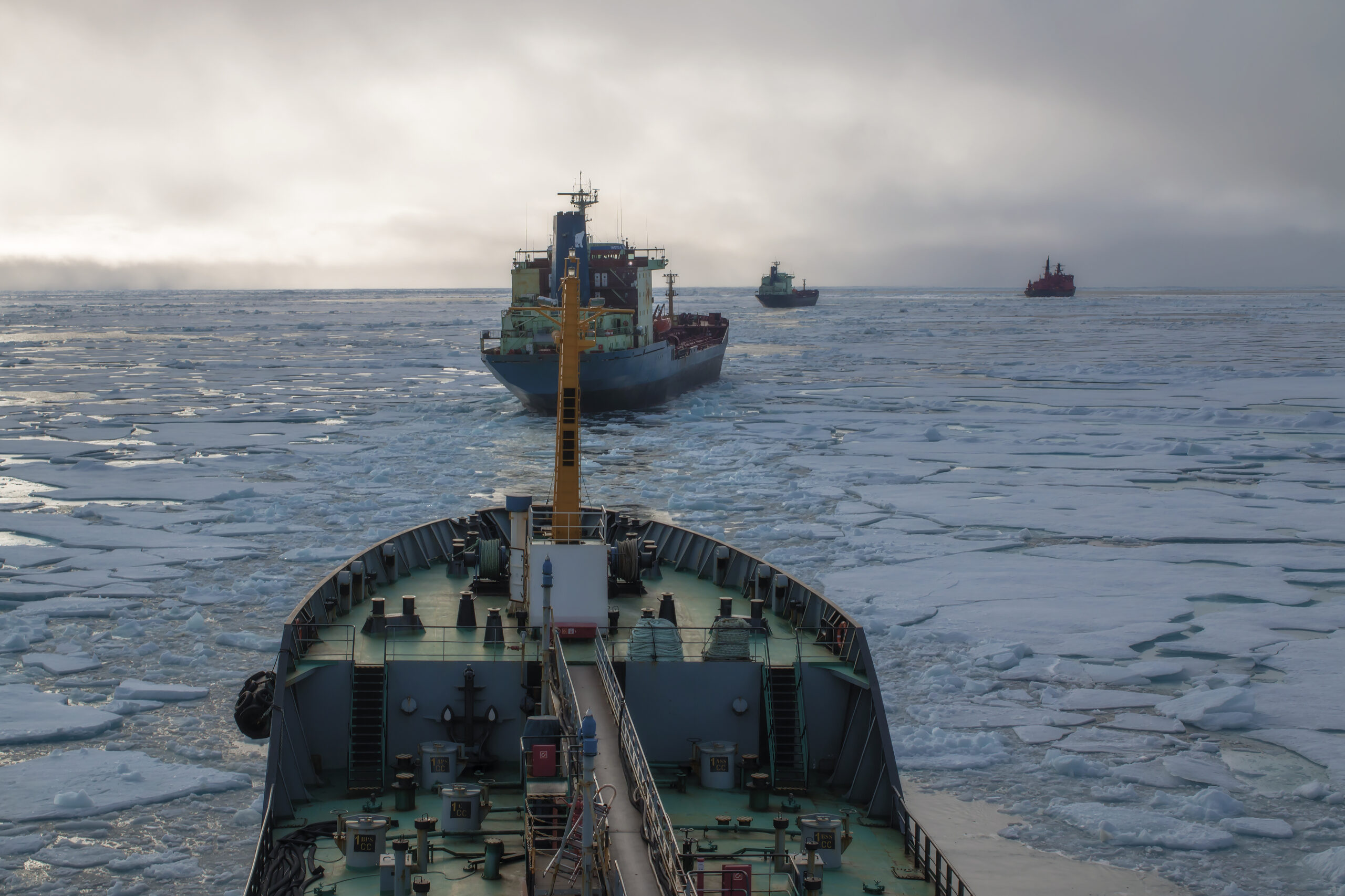
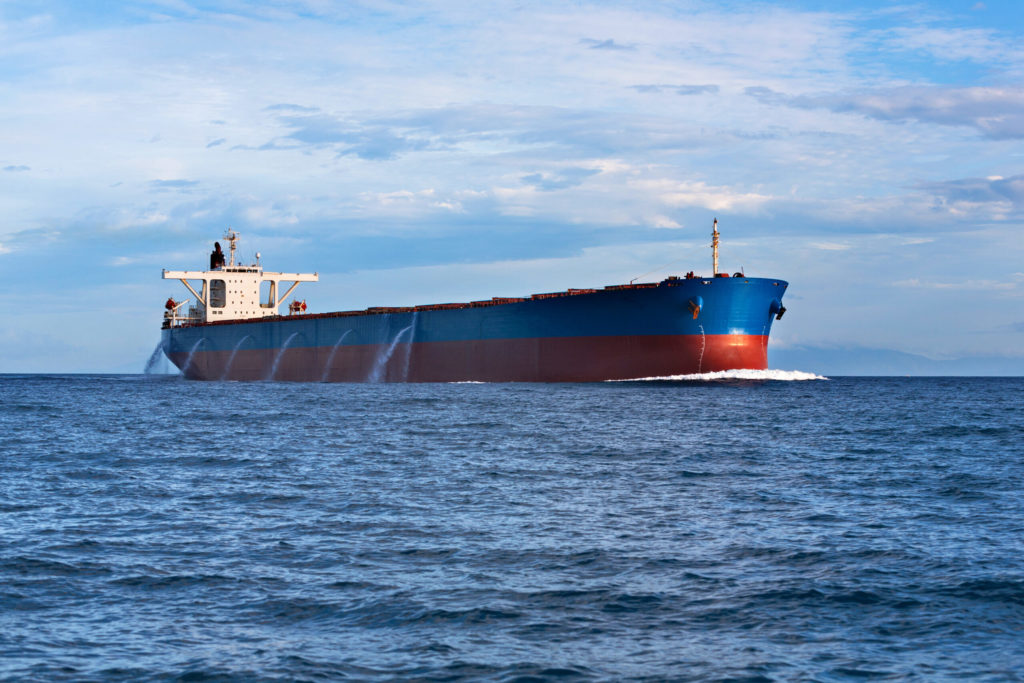
As more vessels travel through the narrow Bering Strait, threats to wildlife increase.
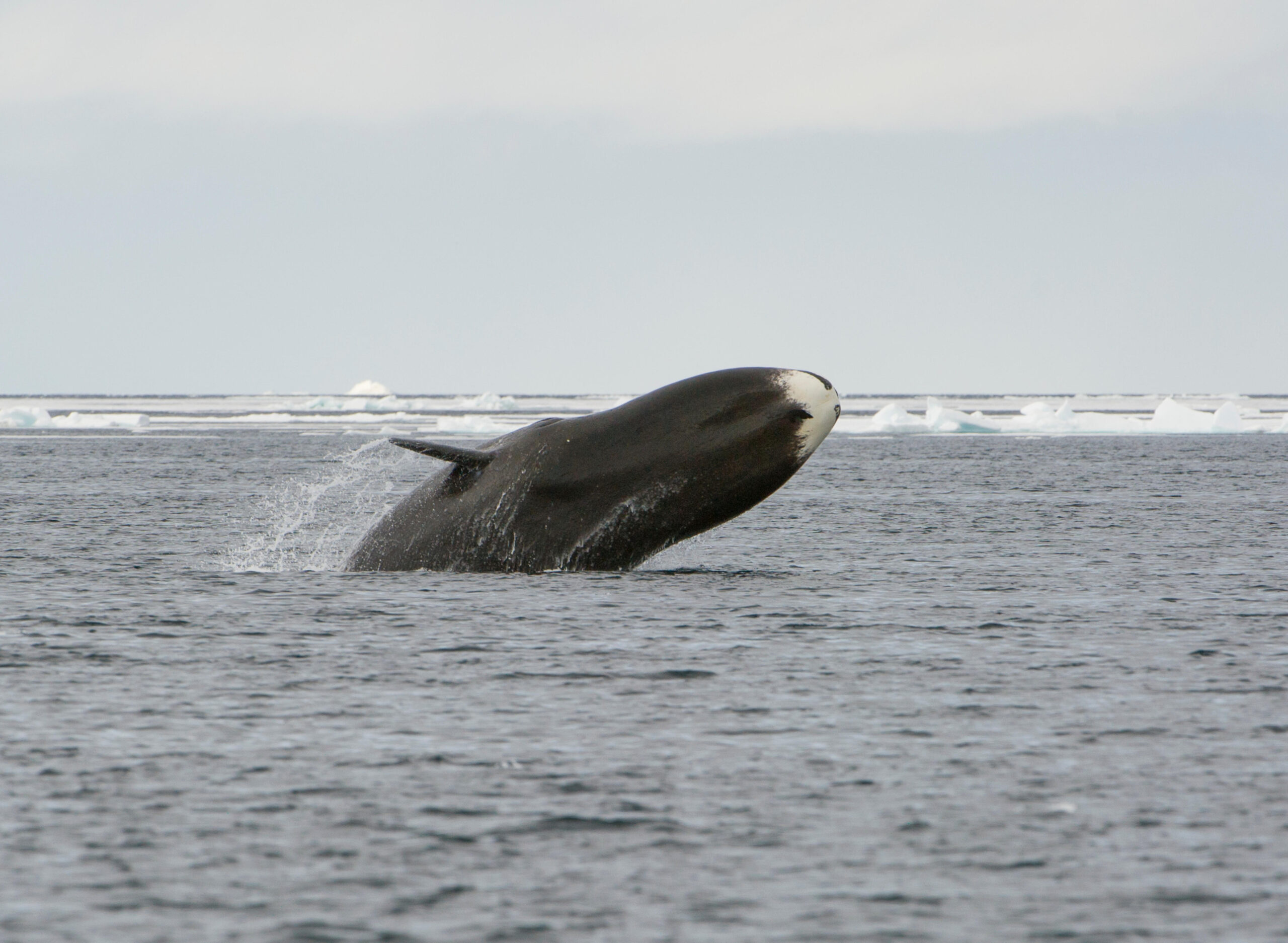
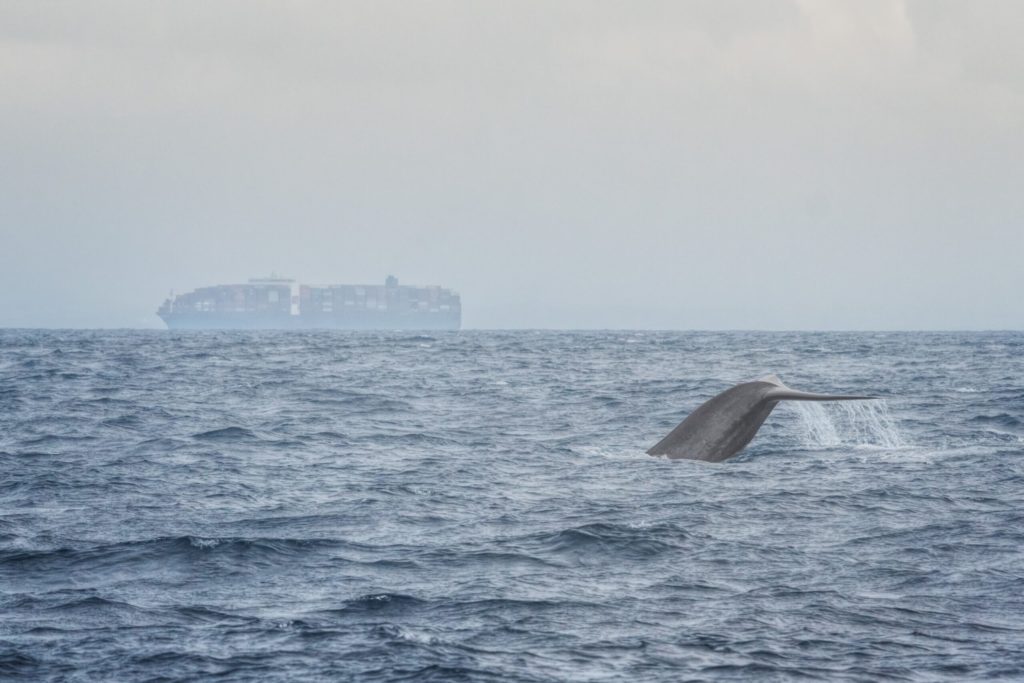
For example, bowhead whales migrate through the Bering Strait in the fall, which is also a busy time for vessel traffic. That increases the risk of ship strikes that can injure or kill these large, slow-moving whales.
Records show all large whales are vulnerable to ship strikes, and Arctic species like bowhead and Pacific right whales are the most at risk.
Click image for more information.
This map shows concentration areas and migration corridors of bowhead whales in the Bering Strait.
What Does a Bowhead Whale Sound Like?
Bowhead whales sing elaborate, freeform songs, causing researchers to call them the “jazz musicians” of the Arctic.
What Does an Icebreaker Sound Like Underwater?
Loud noises from an icebreaker’s propellers and engines can be harmful to marine mammals.
Adverse Impacts on a Way of Life
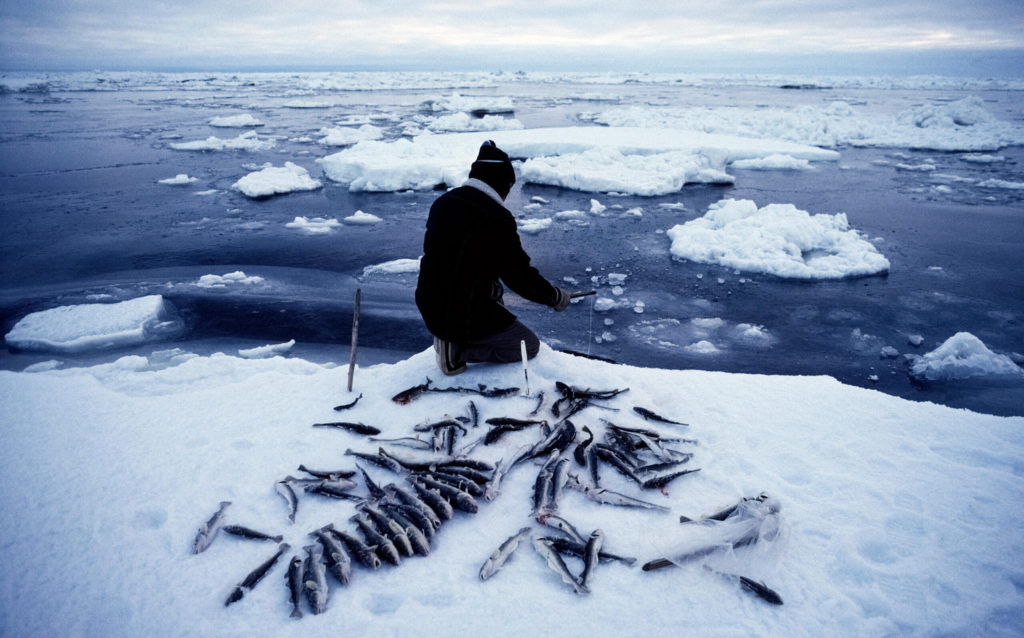
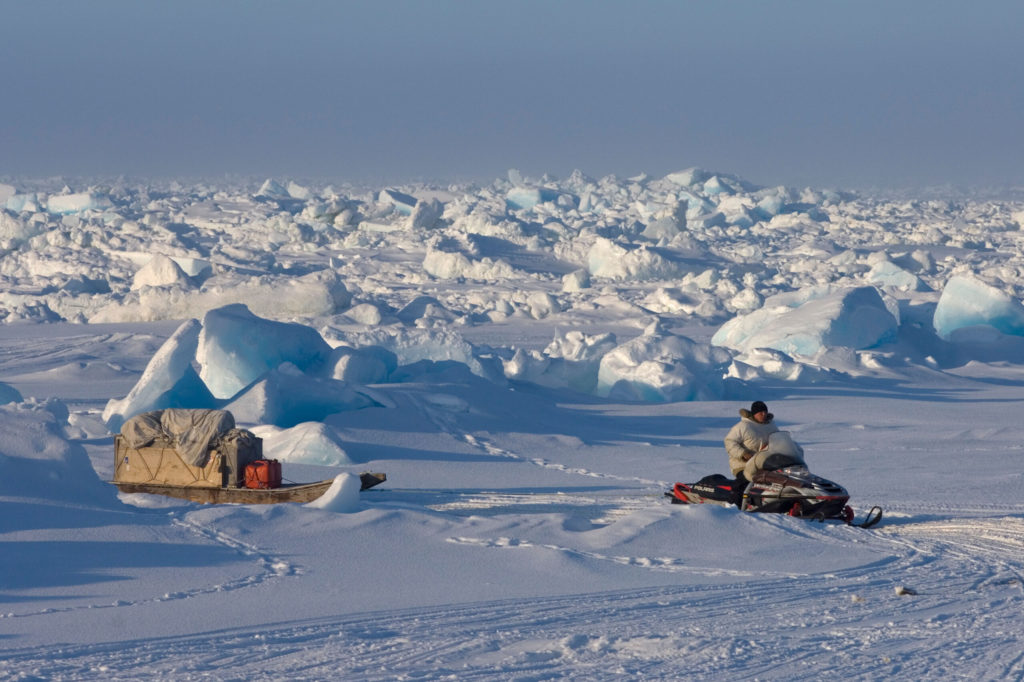
Increased shipping also threatens subsistence hunting and fishing practices that are essential for the food security and cultural practices of many Alaska Native communities.
CLICK IMAGE FOR MORE INFORMATION.



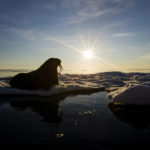
Walrus on an ice floe.
Photo By: Paul Souders / World Foto
Photo By: Paul Souders / World Foto
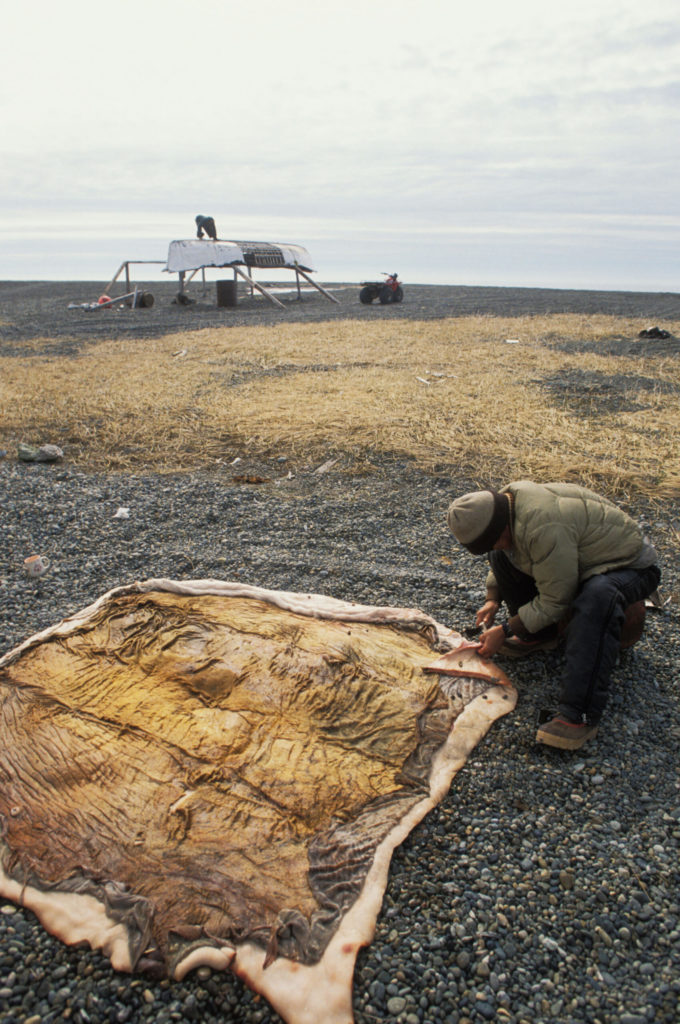
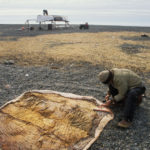
A St. Lawrence Island resident skins a walrus.
Photo By: Nik Wheeler
Photo By: Nik Wheeler
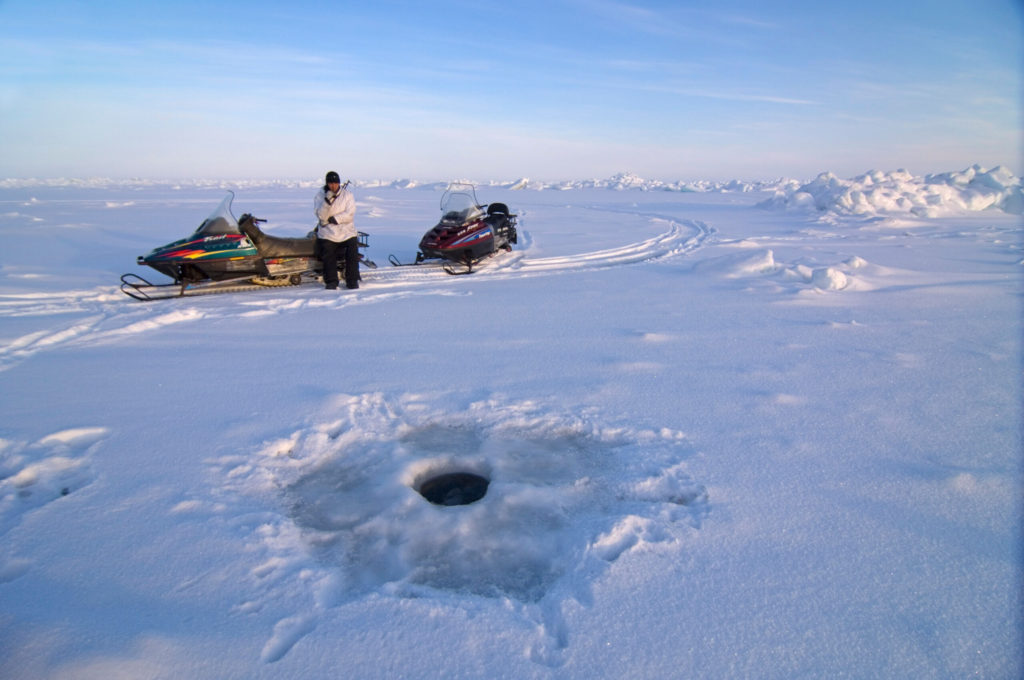
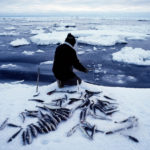
Fishing with a simple drop-line at the edge of an ice floe in the Bering Sea near Nome, Alaska.
Photo By: Michele and Tom Grimm
Photo By: Michele and Tom Grimm
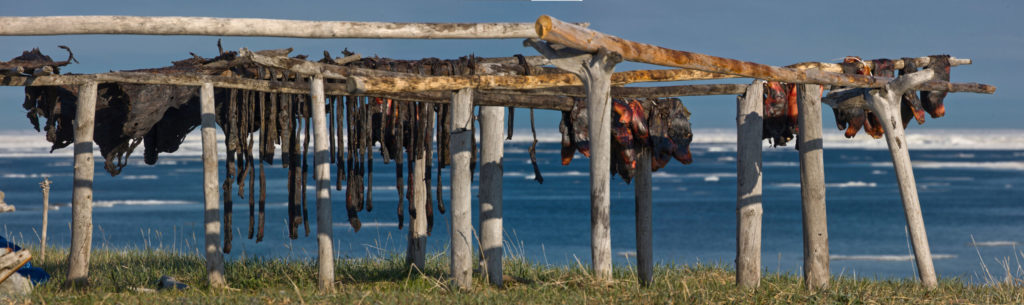
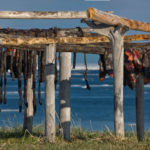
Seal intestines and meat on drying racks near Bering Sea, Shishmaref Island, Alaska.
Photo By: Hal Gage
Photo By: Hal Gage
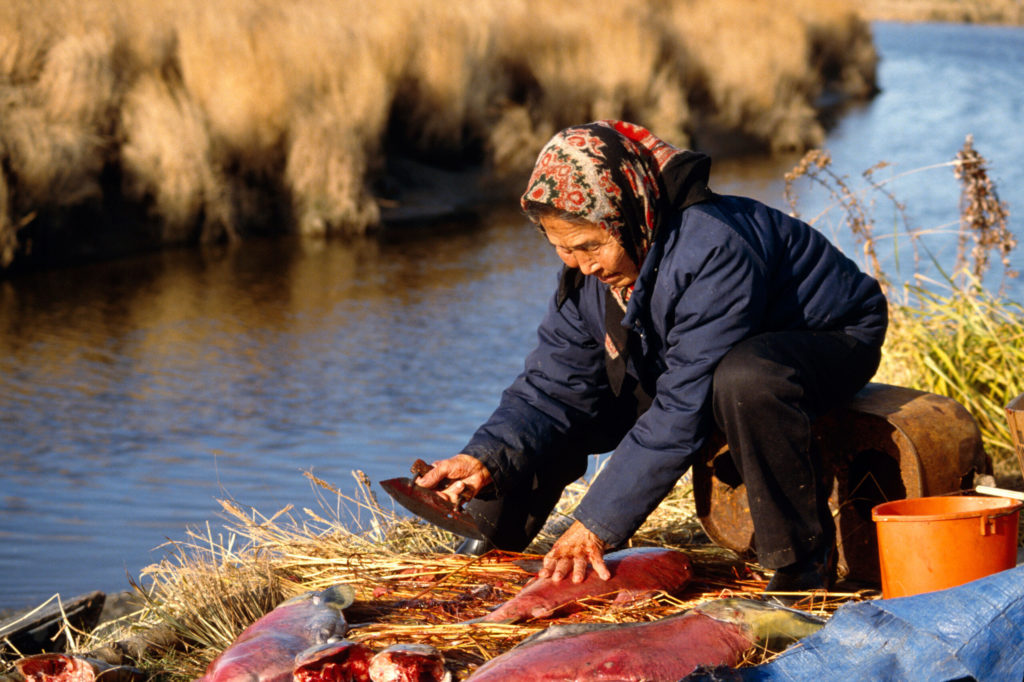
A Yup’ik woman filleting red salmon, Togiak, Alaska.
Photo By: Doug Ogden
Photo By: Doug Ogden
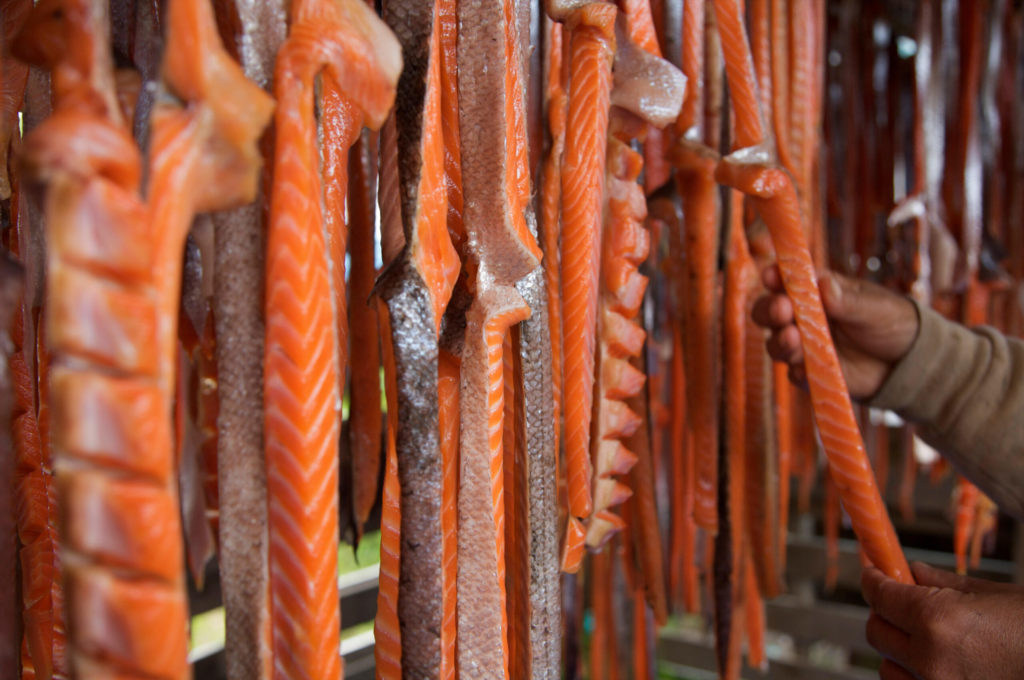
Salmon hanging from racks to dry near Dillingham, Alaska.
Photo By: Clark Mishler
Photo By: Clark Mishler
Yup'ik foods prepared by Martha Nickolai, Kwethluk, Alaska.
Photo By: Clark Mishler
Photo By: Clark Mishler
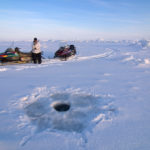
A ringed seal hole in pack ice on the Chukchi Sea near Point Barrow, Arctic Alaska.
Photo By: Steven Kazlowski
Photo By: Steven Kazlowski
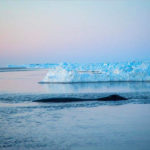
A bowhead whale spotted by a hunting party, Barrow, Alaska.
Photo By: Steven Kazlowski
Photo By: Steven Kazlowski
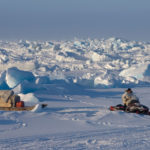
An Inupiaq whaler tows a sled of gear during spring whaling season near the Chukchi Sea, Alaska.
Photo By: Steven Kazlowski
Photo By: Steven Kazlowski



Recommendations

Ships should use traffic routes designed by the International Maritime Organization (IMO) and avoid designated no-go zones.
To avoid ship strikes, vessels should slow down when they encounter pods of large, slow-moving whales.
Slower ship speeds can also reduce emissions and lessen underwater noise.
A variety of other ship design considerations, maintenance practices, policy solutions and economic incentives can decrease underwater noise and its impacts.
Routing measures and no-go zones help reduce underwater noise, improving ecological integrity and resilience of species.
Less Ice, More Ships = New Challenges



“Improving shipping safety will help protect the Bering Strait for future generations.”